
Cleaning cloth car seats might seem like a daunting task, but with the right steps, it can be easily achieved.
What You Need For Cleaning The Car Seat
- Water
- Soft Cloth
- Dry towels
- Spray bottle
- Clean towels
- Paper towels
- Vacuum Cleaner
- Microfiber Cloths
- Soft-bristled brush
- Fabric Cleaner
Before-Cleaning
Determine Seat Material
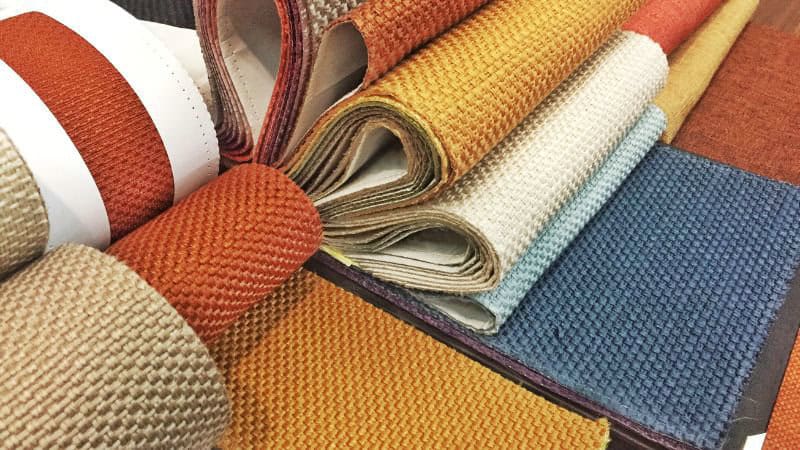
It’s important to know the type of material your car seats are made from. The commonly used car seat materials include artificial leather, suede material, Pu leather and cloth.
| Type | Durability | Comfort | Best For |
|---|---|---|---|
| Fabric | Moderate | High | Budget-conscious owners |
| Leather | High | High | Luxury/prestige seekers |
| Vinyl | High | Moderate | Families/high-use scenarios |
| Alcantara | High | High | Performance/luxury interiors |
Test the Cleaner
Before your cleaning, test the upholstery cleaner on an inconspicuous area of the seat to ensure it doesn’t cause fading or damage to your car.
Remove Debris
Remove any accessories from the seats, such as seat cushions or backrest covers. This ensures you to access all areas of the seat for thorough cleaning and make the cleaning process more effective.
Step by Step Instructions of Cleaning Your Car Seat
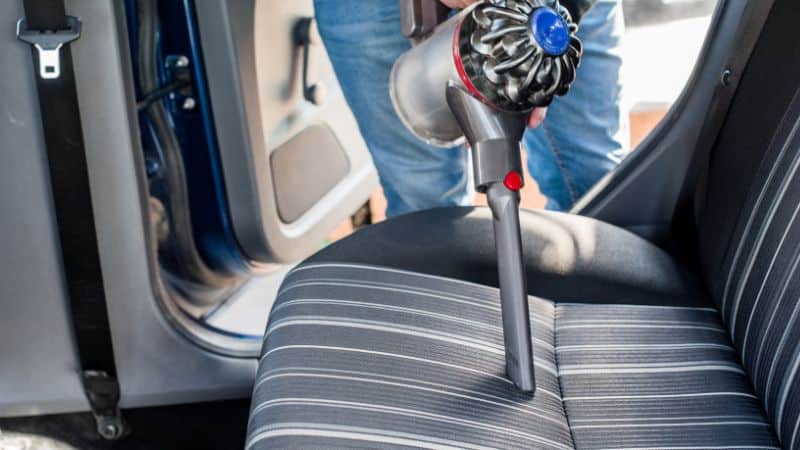
Step 1: Vacuum the Seats
Try using a high-powered vacuum cleaner to thoroughly clean your entire seat, including the crevices and under seat cushions. This step will remove grease stains, crumbs, pet hair and dust, making the cleaning process more effective.
Step 2: Prepare the Cleaning Solution
Prepare a mild, upholstery-safe cleaning solution and mix it with warm water according to the manufacturer’s instructions. Ensure that the solution is not too strong, as this could damage the interior fabric.
Step 3: Pre-Treat Stains
Identify any car seat stains and pre-treat them with a cleaning solution. Apply the cleaner directly to the tough stain in your car. It can break down and loosen the stain particles, making them easier to wash away during the regular cleaning process.
Step 4: Apply the Cleaning Solution
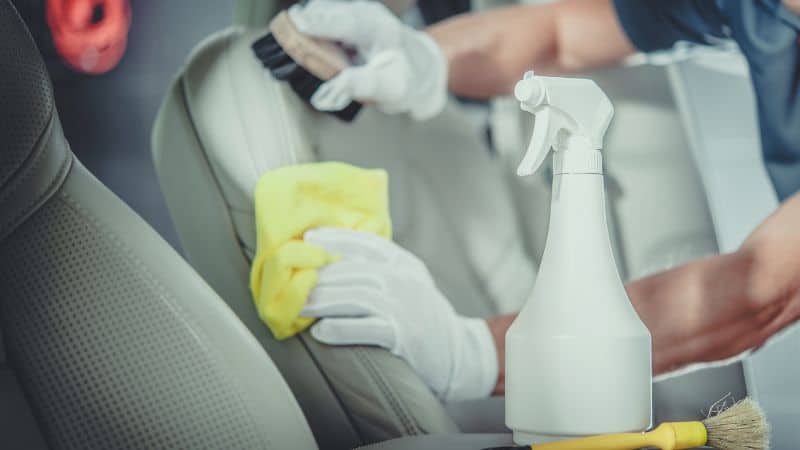
Pour the solution into a spray bottle for easier application and better control over the amount used. Spray the solution onto the cloth seats and let it sit for a few minutes.
Step 5: Wipe and Scrub
Use a soft cloth or a clean microfiber towel to gently wipe clean in small, circular motions. Work in sections to prevent soaking the fabric.
Then apply a clean, dry towel or paper towel to absorb the cleaning solution and remove stains from your car seat fabric. If necessary, grab a soft-bristled brush or scrub brush and use it to scrub stubborn stains, but avoid using excessive force.
Step 6: Rinse and Dry
Use a damp cloth with clean water to rinse the fabric seats and remove any residue from the cleaning solution. Blot the fabric with paper towels or dry cloth to wipe away any excess moisture.
Step 7: Allow to Dry Completely
Open the car windows and let the seat air dry, which can speed up the drying process of your car’s fabric. You can also use a fan to make it dry faster. Allow the seats to dry completely before using your car, as this could cause mildew or odors.
Step 8: Inspect and Repeat if Necessary
Once the seats are dry, inspect them for any remaining stains or dirt. If necessary, repeat the cleaning process until the seats are clean and free of stains.
Homemade Alternatives to Upholstery Cleaner
If you don’t have any cleaning products, making fabric car seat cleaner at home is a cost-effective and eco-friendly alternative to purchasing commercial cleaners. However, always make sure that the homemade cleaner is suitable for your seat material before use.
Ingredients:
- 1 cup of warm water: Warm water helps to loosen dirt and grime, making it easier to clean your seats.
- 1/4 cup of mild, liquid laundry detergent: Make sure to choose a detergent that’s free of bleach and harsh chemicals, as these can damage your car seats. A mild, gentle detergent will effectively clean your seats without compromising their integrity.
- 1 tablespoon of white vinegar (optional): Vinegar is a natural cleaning agent that can boost the cleaning power of your homemade cleaner. It also has deodorizing properties, which can help to neutralize any unpleasant odors in your car.
- A few drops of essential oil (optional): Adding a few drops of essential oil to your cleaner can give it a fresh, inviting scent. Lavender, tea tree, and eucalyptus are all great choices for their soothing and refreshing aromas.
Simply mix these ingredients together in a bowl or bucket, and you’ll have a homemade fabric car seat cleaner that’s ready to use.
Tips for Keeping Car Seats Clean Longer
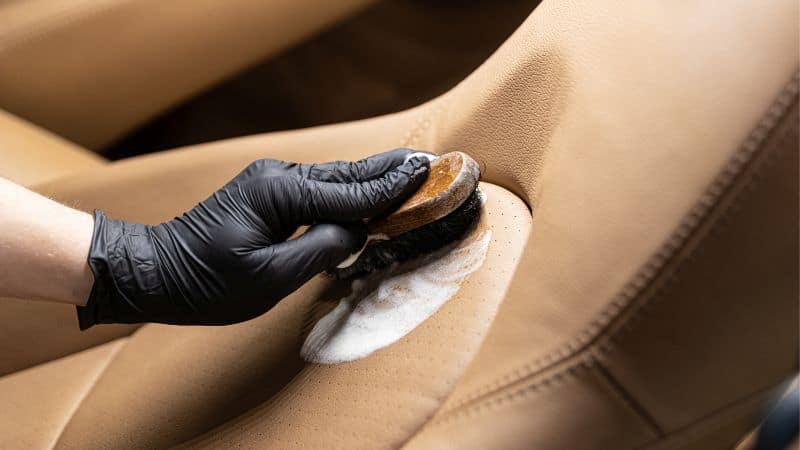
Use Seat Covers
Try to use seat covers, especially if you have kids or pets. They can protect your seats from dirt, scratches, and spills.
Regular Vacuuming
Vacuum your car seats regularly to remove loose dust and debris. This prevents the accumulation of dirt that can lead to stains and wear.
Prompt Stain Removal
Address fresh stains immediately. The longer a stain sits, the harder it becomes to remove. A spray-on fabric protector is a good tip to keep your seat clean and reduce the attachment of stains to your seats.
Avoid Harsh Chemicals
Stay away from harsh chemicals or abrasive cleaning tools that can damage seat materials. Always test cleaners on a small and inconspicuous area first.
Protect Fabric Seats from Sunlight
Long exposure to sunlight can fade fabric seats and weaken their fibers. Use window shades or park in shaded areas to extend the lifespan of your fabric seats.
Frequently Asked Questions
What not to use to clean car seats?
Avoid bleach, hydrogen peroxide, antibacterial products, harsh chemicals, and shaving cream.
Can I use soap and water to clean my car seats?
Only mild dish soap diluted in warm water is suitable for spot-cleaning plastics or seatbelts.
Avoid soaking fabric seats, as soap residues attract dirt and may damage fibers; opt for vinegar solutions.
Can you introduce different types of car upholstery?
The main types of car upholstery are fabric (affordable, breathable), leather (luxurious, durable),and vinyl (water-resistant, low-cost).
How Often Should You Clean the Car Seats?
It’s a good idea to vacuum the car seats at least once a month. Every 3 to 6 months, you can have a deep cleaning.
How to clean leather seats?
It requires regular conditioning to maintain softness, shine, and overall appearance. Use a high-quality leather conditioner as recommended by the manufacturer.
Can I Use Laundry Detergent to Clean Car Seats?
Yes, you can use laundry detergent to clean car seats, but you need to choose a mild laundry detergent that is free of bleach and harsh chemicals, and ensure it is suitable for cleaning fabrics.
How to Clean Car Seats Without Leaving Water Stains?
To avoid water stains, blot away excess moisture with dry towels or paper towels after cleaning. Ensure good ventilation within the car to allow the seats to dry naturally.
For fabric seats, you can use a blow dryer on a cool setting to expedite the drying process, but avoid directing it too closely to the fabric fibers.