
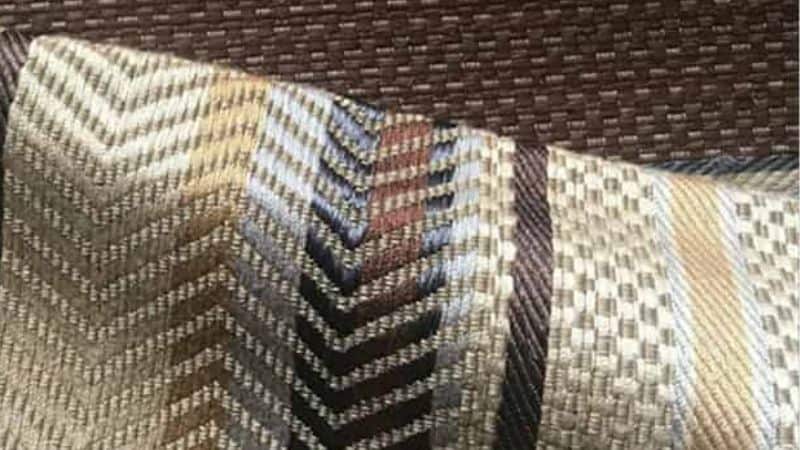
Jacquard fabric, with its intricate woven patterns and luxurious texture, has captivated the world of textiles for centuries. Named after its inventor, Joseph Marie Jacquard, this unique fabric is created using a special loom that weaves the design directly into the fabric rather than printing or embroidering it on the surface. The result is a fabric with unparalleled depth, dimension, and durability.
Definition of Jacquard Fabric
Jacquard fabric is a type of fabric woven with intricate, raised patterns directly into the material using a specialized loom, creating durable textiles with decorative designs like florals or geometric shapes.
The term ‘jacquard’ itself doesn’t refer to the pattern but to the specific weave.
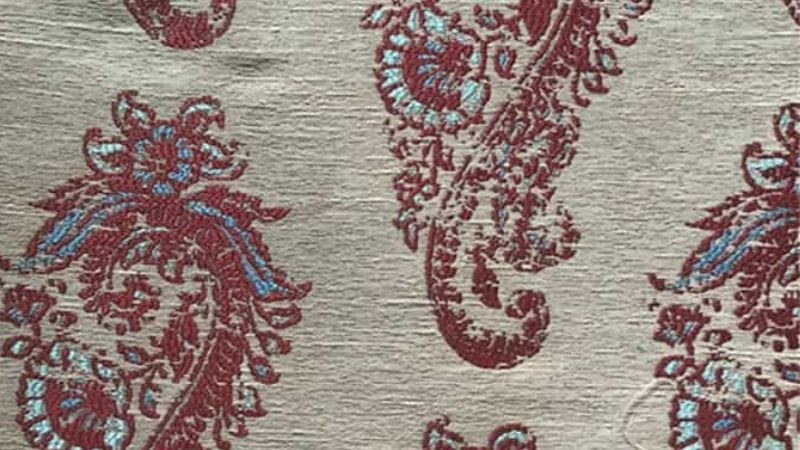
History of Jacquard Fabric
Before 1804, complex woven patterns required manual manipulation of warp threads. The production is slow until Joseph Marie Jacquard introduced the Jacquard loom in 1804.
Jacquard loom used punch cards to automate thread control. This allowed intricate patterns like florals, damasks to be woven directly into fabric without manual assistance.
Initially used in the silk weaving industry in places like Lyon, France, jacquard fabric gained popularity for its opulent patterns. In the 19th century, these fabrics became synonymous with luxury and were often featured in home furnishings and fashion garments alike.
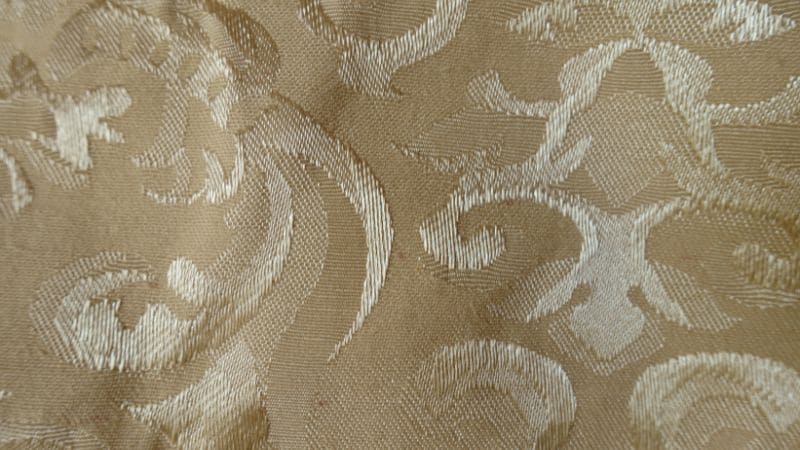
In the modern era, instead of relying on punched cards, these modern jacquard looms are controlled by computer software. Designers can now create intricate patterns using specialized software, which then translates the design into digital instructions for the loom.
What are the Types of Jacquard Fabric
Natural Fiber Jacquards
Natural fibers like cotton, silk, linen, and wool are commonly used in Jacquard fabrics, giving you a range of textures and properties:
- Cotton Jacquard: Offers durability and comfort, with a less complex weaving process.
- Silk Jacquard: Known for its luxurious sheen and softness, silk Jacquard is often used in high-end garments and decor.
- Linen Jacquard: Valued for its natural luster and strength, linen variants bring an organic elegance to the Jacquard family.
- Wool Jacquard: Ideal for tapestries and heavier clothing due to its warmth and intricate weaving possibilities.
Each material offers unique benefits, such as cotton’s breathability and wool’s insulation, catering to different needs and preferences.
Synthetic Fiber Jacquards
Synthetic fibers, on the other hand, provide you with alternative options that might suit different practical requirements:
- Polyester and Other Synthetic Jacquards: These materials are often more affordable and boast high durability and easy maintenance.
Synthetic Jacquard fabrics can mimic the look and feel of natural fibers while offering added benefits like stain resistance and longevity.
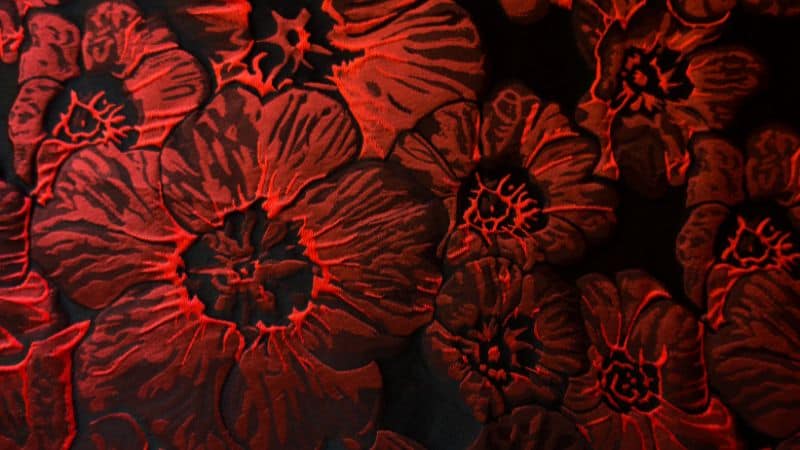
Popular Jacquard Designs
The most admired and sought-after jacquard designs are:
- Brocade: A class of richly decorative shuttle-woven fabrics, often made in colored silks and with or without gold and silver threads.
- Damask: Known for its reversible figures, damask is an elegant pattern with a subtle sheen created by weaving one warp yarn and one weft yarn, with the pattern being woven into the fabric.
- Matelassé: A fabric with a quilted appearance, creating a padded effect.
- Cloqué: This means ‘blistered’ in French. Cloqué fabrics feature a puckered or raised surface that’s fashioned by weaving different yarns together.
- Brocatelle: Typically heavier than brocade, brocatelle is a tightly woven fabric often used for upholstery, offering a raised pattern that gives a padded effect.
What is Jacquard Fabric Used For?
| Industry/Category | Specific Applications | Common Material Types | Key Characteristics |
|---|---|---|---|
| Fashion & Apparel | Evening gowns, formal dresses , suits, blazers, ties, scarves, handbags, structured jackets | Silk, cotton-polyester blends, metallic yarns | Luxurious texture, raised patterns for visual depth, drapes elegantly
|
| Home Décor | Upholstery, curtains/draperies, bedding, table linens | Polyester, cotton, wool blends | High durability, fade resistance, textured patterns withstand heavy use |
| Technical & Specialized | Automotive interiors (seat covers), wall tapestries, laser-cut accessories (precise edges), activewear/yoga wear (stretch blends) | Polyester-spandex, acrylic blends | Pattern integrity after cutting, edge sealing, breathability, flexibility |
| Luxury & Craft | Embroidered pajamas, decorative pillows, artisan quilting, ceremonial robes | 100% silk, velvet blends, damask weaves | Reversible designs, metallic threads, quilted appearance (matelassé) |
How to Maintain the Jacquard Upholstery
Daily & Weekly Maintenance
- For hand bag: Use a soft-bristled brush attachment weekly to remove dust from crevices and seams, preventing dirt from embedding into raised patterns.
- For cushions: Rotate cushions biweekly to distribute wear evenly. Hand-fluff to maintain filling shape and support
- For furniture: Position furniture away from direct sunlight. Use UV-blocking window films to prevent fading of vibrant jacquard dyes.
Stain Management for Jacquard
- Immediate Blotting: Dab spills with a clean, white cloth (never rub) to prevent liquid from spreading into woven designs. Rubbing distorts fibers and blurs patterns.
- Stain-Specific Solutions:
| Stain Type | Treatment |
|---|---|
| Food/Drinks | Blot, then apply distilled water or mild detergent; rinse with damp cloth
|
| Grease/Oil | Sprinkle cornstarch/baking soda, wait 15 mins, vacuum, then dab with diluted vinegar |
| Ink | Dab with rubbing alcohol on a cotton swab (test hidden area first) |
| Water Spots | Mist with 1:1 vinegar-water solution; blot gently |
Where is Jacquard Fabric Produced?
China dominates the jacquard fabric industry, accounting for ~40% of global production, driven by unparalleled industrial scale, cost efficiency, and raw material access. The heart of this output lies in Zhejiang Province. Beyond Zhejiang, factories in Jiangsu, Shandong, and Sichuan expand China’s capacity of jacquard fabric.
India, while smaller in scale, excels in traditional silk jacquard centered in Surat, Delhi, Kolkata, and Bengaluru.
The Price of Jacquard Fabric
The intricate weaving technique of jacquard fabric requires specialized looms and skilled labor, increasing manufacturing costs by 25–40% compared to standard textiles.
| Factor | China |
|---|---|
| Price Range | ¥28.8–360/meter (functional/home) on average |
| Key Products | Waterproof home décor, blackout curtains |
| Cost Drivers | Scale economies, automation |
| Export Competitiveness | 15–20% lower than EU/US |
Looking for Jacquard Fabric Suppliers? Sinocomfort Delivers Unmatched Quality & Competitive Pricing!
Frequently Asked Questions
Is jacquard the same as cotton?
No. Jacquard refers to a weaving technique that creates intricate patterns by controlling individual warp threads. Cotton is a natural fiber (material). Jacquard fabrics can be made from cotton, silk, wool, synthetics, or blends.
What are the environment impact of jacquard fabric?
Conventional cotton farming uses pesticides/water; synthetic blends (e.g., polyester) contribute to microplastic pollution and are non-biodegradable.
What are the characteristics of jacquard?
Intricate patterns, durability, versatility and breathability.
What is the difference between viscose and jacquard fabric?
Viscose defines fiber content; jacquard defines weave structure. They are complementary rather than mutually exclusive.